

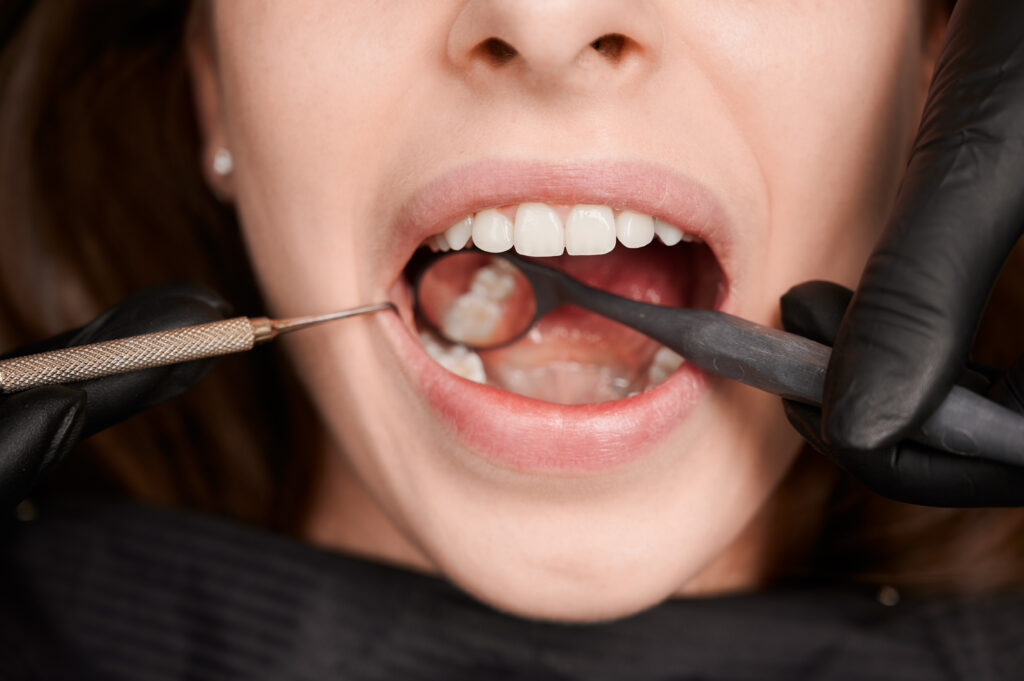
Many people assume a cavity always ends with a drill and a filling. In reality, tooth decay develops gradually, and the right tooth decay treatment depends on how far it has progressed. Caught early, weakened enamel can often be strengthened before a hole forms. Once a cavity is present, professional tooth decay treatment from your dentist is necessary to restore the tooth.
This guide explains how decay begins, which daily habits support your teeth, and when it is time to look for tooth decay treatment in Ottawa.
How Tooth Decay Begins
Your mouth is full of bacteria that feed on sugars and starches. As they break these foods down, they release acids that draw minerals out of your enamel, the hard outer layer of each tooth. Saliva and fluoride help put those minerals back, but when acid attacks happen too often, enamel gradually weakens.
The earliest warning sign is often a chalky white spot on the tooth surface. At this stage, fluoride and better habits can help strengthen the enamel. If the process continues, a cavity forms and decay moves into deeper layers of the tooth. A cavity cannot repair itself, which is why timely tooth decay treatment matters.
Daily Habits That Support Your Teeth
Be Mindful of How Often You Snack and Sip
It is not only how much sugar you consume, but how frequently. Sipping juice, pop or sweetened coffee throughout the day keeps your teeth under constant acid attack. Enjoy sugary foods with meals, drink water in between, and limit sticky snacks that cling to your teeth.
Keep Up a Steady Cleaning Routine
Brush gently with a fluoride toothpaste in the morning and before bed, taking time to reach every surface. Clean between your teeth daily with floss or interdental brushes, since this is where decay often begins. Your dentist may also suggest a fluoride rinse if you are prone to cavities.
Choose Foods That Look After Your Enamel
Dairy products, kale and broccoli supply calcium, while salmon, sardines and canned tuna provide vitamin D, which helps your body absorb it. Crunchy vegetables and fruit encourage saliva flow. A balanced diet supports your mouth, but it works alongside good cleaning rather than replacing it.
Watch Acidic Foods and Drinks
Coffee, citrus, sports drinks and carbonated beverages can soften enamel. You do not need to give them up. Enjoy them with meals, rinse with water afterwards, and wait a while before brushing so you do not scrub softened enamel.
When You Need Professional Tooth Decay Treatment
Home care protects healthy teeth and supports early enamel repair, but it cannot restore a tooth that already has a cavity. Depending on how far decay has advanced, your dentist may recommend these tooth decay treatment options:
- Fluoride treatments and sealants: strengthen enamel and protect vulnerable grooves in early-stage decay and in children.
- Dental fillings: remove decayed material and restore the shape and function of the tooth.
- Crowns: protect a tooth when decay has weakened a large portion of it.
- Root canal therapy: treat decay that has reached the nerve and caused infection or severe pain.
- Extraction: considered when a tooth cannot be saved, followed by options to replace it.
The earlier decay is found, the simpler and more comfortable tooth decay treatment usually is. Many cavities cause no pain until they are advanced, which is why regular check-ups and X-rays matter.
Signs It Is Time to Book a Visit
- Sensitivity to hot, cold or sweet foods
- White, brown or black spots on a tooth
- A lingering toothache or pain when biting, which may need urgent dental care
- A rough edge or small hole you can feel with your tongue
- Persistent bad breath or an unpleasant taste
Frequently Asked Questions About Tooth Decay Treatment
Can a cavity repair itself?
Very early enamel damage can sometimes be strengthened with fluoride and better habits. Once a cavity has formed, the tooth cannot rebuild itself and needs tooth decay treatment from a dentist.
What is the usual tooth decay treatment for a cavity?
A filling is the standard approach. Your dentist removes the decayed area and restores the tooth with a tooth-coloured material. Deeper decay may need a crown or root canal therapy.
Is tooth decay treatment painful?
Your dentist will freeze the area, so you should be comfortable throughout. Mild sensitivity afterwards usually settles within a few days.
How do I know if I need tooth decay treatment in Ottawa?
Sensitivity, visible spots and toothache are common signs, but early decay often causes no symptoms. A dental exam and X-rays reveal what you cannot see.
How often should I visit the dentist to prevent cavities?
Most people benefit from regular check-ups and cleanings. Your dentist will set the schedule based on your risk of decay.
Book Tooth Decay Treatment at Island Park Dental
Do not wait for a small issue to turn into a painful problem. The team at Island Park Dental provides gentle, personalized tooth decay treatment to help Ottawa families stop decay early and restore teeth that need care. Contact Island Park Dental today to book your visit and keep your smile healthy for many years to come.
