

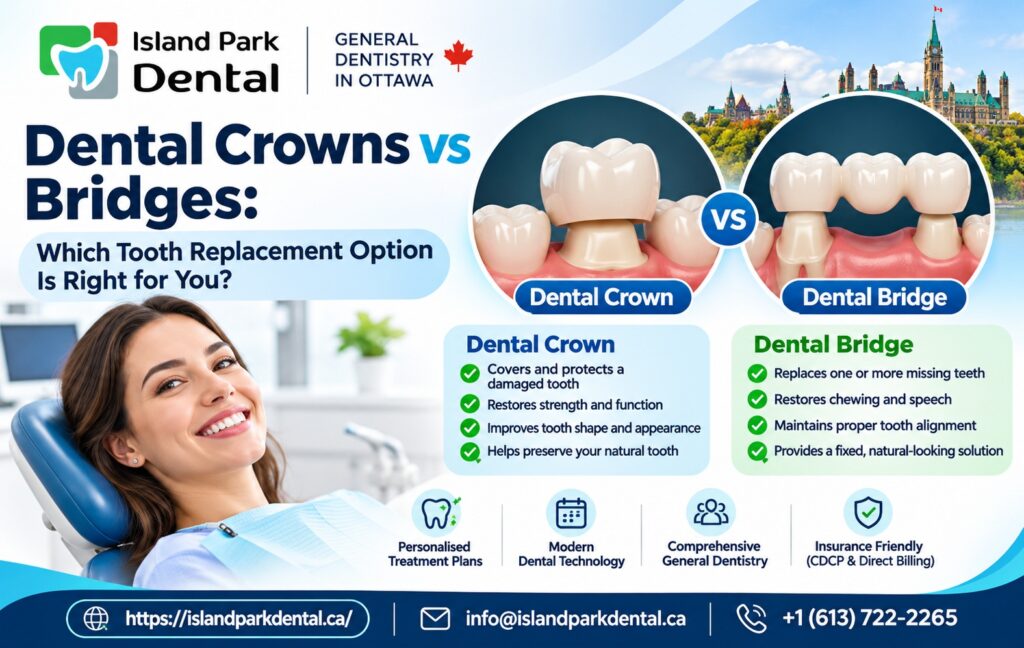
A damaged or missing tooth can affect more than the appearance of your smile. It can make chewing uncomfortable, change your bite, affect speech, and create difficulties maintaining proper oral hygiene. Fortunately, modern restorative dentistry offers several solutions to help protect your teeth and restore everyday function. Two commonly recommended treatments are dental crowns and dental bridges.
Although both treatments are designed to improve dental function and appearance, they serve different purposes. A dental crown covers and protects an existing tooth, while a dental bridge replaces one or more missing teeth by using neighbouring teeth or other suitable dental support.
If you are searching for a top dental clinic in Ottawa, understanding these treatments can help you make a more informed decision before your dental appointment. At Island Park Dental, patients can explore restorative options as part of personalised dental care designed around their oral health needs.
What Are Dental Crowns?
A dental crown is a custom-made restoration that fits over an existing tooth to restore its shape, strength, size, and appearance. It covers the visible portion of the tooth above the gum line and helps protect weakened dental structures from further damage.
Dentists may recommend a crown when a tooth has experienced significant decay, a fracture, extensive wear, or damage following root canal treatment. A crown can also improve the appearance of a tooth that has become severely discoloured or misshapen.
Unlike a traditional filling, which repairs a smaller area, a crown covers the entire visible portion of the prepared tooth. The restoration is designed to fit comfortably with your surrounding teeth and support normal biting and chewing.
When Might You Need a Dental Crown?
A dental crown may be recommended for several reasons:
Severely damaged teeth: When a tooth has extensive decay or structural damage that cannot be adequately restored with a filling.
After root canal treatment: To protect a weakened tooth and reduce the risk of fracture when a crown is clinically indicated.
Cracked or worn teeth: To restore strength and protect the remaining tooth structure.
Cosmetic improvement: To improve the shape, size, or appearance of certain damaged or discoloured teeth.
The decision depends on the remaining tooth structure, gum health, bite, and overall dental condition.
What Are Dental Bridges?
A dental bridge is a fixed dental restoration used to replace one or more missing teeth. It fills the space left by missing teeth and helps restore chewing function, appearance, and tooth alignment.
A traditional dental bridge usually consists of an artificial replacement tooth, known as a pontic, supported by dental crowns placed on the neighbouring teeth. These supporting teeth are called abutment teeth.
Dental bridges can be particularly useful when a patient has healthy supporting teeth and wants a fixed replacement without removing the restoration daily. However, the suitability of a bridge depends on the condition of the surrounding teeth, gums, and supporting bone.
When Might You Need a Dental Bridge?
Your dentist may recommend a dental bridge in situations such as:
One or more missing teeth: A bridge can fill a gap and restore the appearance of your smile.
Difficulty chewing: Replacing missing teeth may improve your ability to bite and chew comfortably.
Changes in tooth alignment: A missing tooth can allow neighbouring teeth to shift towards the empty space.
Speech concerns: Replacing certain missing teeth may help improve speech clarity.
A dental examination is essential to determine whether the neighbouring teeth can safely support a bridge.
Dental Crowns vs Bridges – Understanding the Key Differences
Although crowns and bridges are both restorative dental treatments, their functions, placement, and suitability are different. Understanding these differences can help you discuss the right treatment with your dentist.
Comparison Table: Dental Crowns vs Dental Bridges
| Comparison Factor | Dental Crowns | Dental Bridges |
|---|---|---|
| Main purpose | Protect and restore a damaged tooth | Replace one or more missing teeth |
| Tooth condition | Used when a natural tooth remains | Used when a tooth is missing |
| Structure | Covers the visible portion of a tooth | Contains artificial replacement teeth and supporting components |
| Support | Usually supported by the existing tooth | Supported by neighbouring teeth or another suitable design |
| Primary benefit | Restores strength and appearance | Restores the appearance and function of missing teeth |
| Treatment preparation | Requires preparation of the affected tooth | Usually requires preparation of supporting teeth for a traditional bridge |
| Maintenance | Requires regular brushing, flossing, and dental check-ups | Requires careful cleaning around and beneath the bridge |
| Longevity | Often lasts around 5–15 years or longer | Often lasts around 5–15 years or longer |
Note: Lifespan varies according to materials, oral hygiene, bite forces, and individual dental conditions. These are general estimates, not guarantees.
Benefits of Choosing Dental Crowns
Dental crowns offer important advantages for patients who want to preserve and protect damaged natural teeth. When properly designed and maintained, they can provide reliable support for everyday activities.
Why Consider a Dental Crown?
Protects weakened teeth: A crown covers the tooth and helps reduce the risk of further structural damage.
Restores chewing ability: It provides a stable biting surface when the underlying tooth can be restored successfully.
Improves appearance: Tooth-coloured crown materials can create a natural-looking result.
Supports long-term oral health: Protecting a suitable natural tooth may help preserve your existing dental structure.
Crowns are not suitable for every damaged tooth. Your dentist will assess whether enough healthy tooth structure remains to support the restoration.
Benefits of Choosing Dental Bridges
Missing teeth can create several challenges, particularly when the gap affects chewing, speech, or the alignment of surrounding teeth. A dental bridge can help address these concerns.
Why Consider a Dental Bridge?
Replaces missing teeth: A bridge fills the visible gap left by one or more missing teeth.
Restores chewing function: It can improve your ability to bite and chew a wider variety of foods.
Maintains smile appearance: The replacement tooth is designed to blend with the surrounding teeth.
Provides a fixed solution: Unlike removable dentures, a conventional fixed bridge stays in place during normal daily activities.
It is important to remember that a traditional bridge does not replace the missing tooth root. Your dentist can explain whether another treatment, such as a dental implant, may be worth considering.
What Is the Dental Crown and Bridge Procedure Like?
The treatment process depends on the restoration selected, the condition of your teeth, and the materials used. Both procedures generally involve an assessment, preparation, custom restoration, and final placement.
Dental Crown Procedure
A typical crown treatment involves these stages:
Dental examination: Your dentist examines the affected tooth, gums, and surrounding structures. X-rays may be required.
Tooth preparation: The tooth is carefully reshaped to create space for the crown.
Impressions or digital scans: Measurements are taken to help create a restoration that fits your tooth and bite.
Crown placement: Once the custom crown is ready, it is checked for fit and bite before being secured.
A temporary crown may be provided while the permanent restoration is being made.
Dental Bridge Procedure
A traditional dental bridge generally involves the following steps:
Initial consultation: Your dentist checks the missing-tooth area and evaluates the supporting teeth.
Preparation of supporting teeth: The abutment teeth are shaped when necessary to accommodate the supporting crowns.
Impressions or digital scans: The measurements help ensure the bridge fits the space accurately.
Final bridge placement: The completed restoration is fitted, adjusted, and secured.
The number of appointments and overall treatment time can vary depending on the complexity of the case.
How Much Do Dental Crowns and Bridges Cost in Ottawa?
The cost of dental crowns and bridges in Ottawa depends on several factors. There is no single price that applies to every patient because treatment requirements and restoration designs differ.
Some important cost considerations include:
Material selection: Porcelain, ceramic, metal, and porcelain-fused-to-metal restorations have different properties and costs.
Treatment complexity: Extensive tooth damage, gum concerns, or additional procedures may affect the total treatment cost.
Number of teeth involved: A bridge replacing several missing teeth may require a different treatment plan from a single crown.
Insurance coverage: Your dental insurance plan may cover part of the treatment, depending on its benefits and limitations.
Before beginning treatment, request a written estimate outlining the recommended procedure, material options, insurance considerations, and any additional charges.
Patients looking for a Dental Clinic Ottawa residents can consult for restorative care should also ask about payment arrangements and direct insurance billing.
How to Choose Between a Dental Crown and a Dental Bridge?
The right option depends primarily on whether your tooth is damaged or missing. A crown is generally considered when a natural tooth can be preserved and restored. A bridge is considered when one or more teeth are missing and suitable supporting structures are available.
Here are four important questions to discuss with your dentist:
Can the natural tooth be saved? If sufficient healthy tooth structure remains, a crown may be appropriate.
Are neighbouring teeth healthy? Their condition helps determine whether they can support a traditional bridge.
What are your long-term goals? Consider comfort, appearance, maintenance, durability, and future treatment needs.
What is your budget and insurance coverage? Compare treatment estimates and available coverage before making a decision.
A professional examination is the most reliable way to identify the treatment that suits your oral health.
Maintaining Your Dental Crown or Bridge
Good oral hygiene is essential for protecting your restoration and the natural teeth surrounding it. Even though crowns and bridges are designed to be durable, they still require regular care.
Follow these four daily habits:
Brush twice daily: Use a soft-bristled toothbrush and fluoride toothpaste to clean your teeth and restoration.
Clean between your teeth: Use dental floss or appropriate interdental cleaning tools. A floss threader or specialised bridge cleaner may help clean beneath a bridge.
Avoid excessive biting pressure: Do not use your restored teeth to bite hard objects or open packaging.
Attend regular dental check-ups: Professional examinations help monitor the restoration, supporting teeth, and gum health.
If you experience persistent pain, swelling, sensitivity, or a loose restoration, contact your dentist for an assessment.
Why Consider Island Park Dental for Restorative Dentistry in Ottawa?
Choosing a dental practice for restorative treatment involves more than finding a convenient appointment. Patients should look for a team that understands their concerns, explains available treatment options, and develops an appropriate care plan.
Island Park Dental provides general, cosmetic, and specialised dental services for patients in Ottawa. Its general dentistry services include crowns and bridges, root canal treatment, periodontal care, digital dental X-rays, dentures, and bonding with white fillings.
Four reasons to consider Island Park Dental include:
Comprehensive dental services: Access to a range of preventive, restorative, and cosmetic dental treatments.
Personalised treatment planning: Recommendations based on individual dental examinations and oral health requirements.
Modern dental technology: Digital dental imaging and intraoral scanning support diagnostic and restorative treatment planning.
Insurance convenience: The clinic offers direct billing and accepts the Canadian Dental Care Plan (CDCP), subject to applicable eligibility and coverage requirements.
If you are searching online for a top dental clinic in ottawa, Island Park Dental offers a patient-focused approach to general and restorative dentistry.
Restore Your Smile with the Right Dental Treatment
Dental crowns and bridges can both play an important role in restoring damaged or missing teeth. However, they are designed for different dental situations. Crowns protect existing teeth, while bridges replace missing teeth by using suitable supporting structures.
The right choice depends on your oral health, remaining tooth structure, gum condition, bite, treatment goals, and budget. Rather than choosing a procedure based only on appearance or price, seek a professional assessment and discuss the advantages and limitations of each option.
For personalised restorative dental care, contact Island Park Dental and discuss your needs with the dental team.
Frequently Asked Questions (FAQs)
1. What is the main difference between a dental crown and a dental bridge?
A dental crown covers and protects an existing damaged tooth, whereas a dental bridge replaces one or more missing teeth using supporting teeth or another suitable support structure.
2. Is a dental crown better than a dental bridge?
Neither treatment is universally better. A crown is generally suitable for restoring an existing damaged tooth, while a bridge is designed to replace missing teeth. The appropriate option depends on your dental condition.
3. How long do dental crowns and bridges last?
Both restorations commonly last approximately 5–15 years, although some may last longer with proper care. Their lifespan depends on the materials, oral hygiene, bite pressure, and regular dental maintenance.
4. Are dental crowns and bridges painful?
The procedures are generally performed using local anaesthesia to minimise discomfort. Some sensitivity or mild soreness may occur after treatment, but persistent or severe pain should be assessed by your dentist.
5. Can a dental bridge replace multiple missing teeth?
Yes. Certain bridge designs can replace multiple missing teeth, provided there is adequate support and the treatment is suitable for the patient’s oral health.
6. Does a dental crown look like a natural tooth?
Yes. Tooth-coloured materials such as ceramic and porcelain can be selected to complement the shape and shade of surrounding teeth.
7. How do I clean underneath a dental bridge?
Use a floss threader, specialised bridge floss, or an appropriate interdental cleaning device to remove food particles and plaque beneath the artificial tooth. Your dentist or hygienist can demonstrate the correct technique.
8. Can I eat normally after getting a dental crown or bridge?
After your dentist confirms that the restoration is properly placed, you can generally return to normal eating. Avoid excessively hard or sticky foods if advised, and follow any specific aftercare instructions.
9. Does dental insurance cover crowns and bridges in Ottawa?
Some dental insurance plans cover crowns and bridges, but coverage varies according to the policy, annual maximums, deductibles, and treatment limitations. Check your benefits before proceeding.
10. Where can I get dental crown and bridge treatment in Ottawa?
Island Park Dental offers crowns and bridges as part of its general dentistry services. Contact the clinic at +1 (613) 722-2265 or visit https://islandparkdental.ca/ to enquire about an appointment.
