

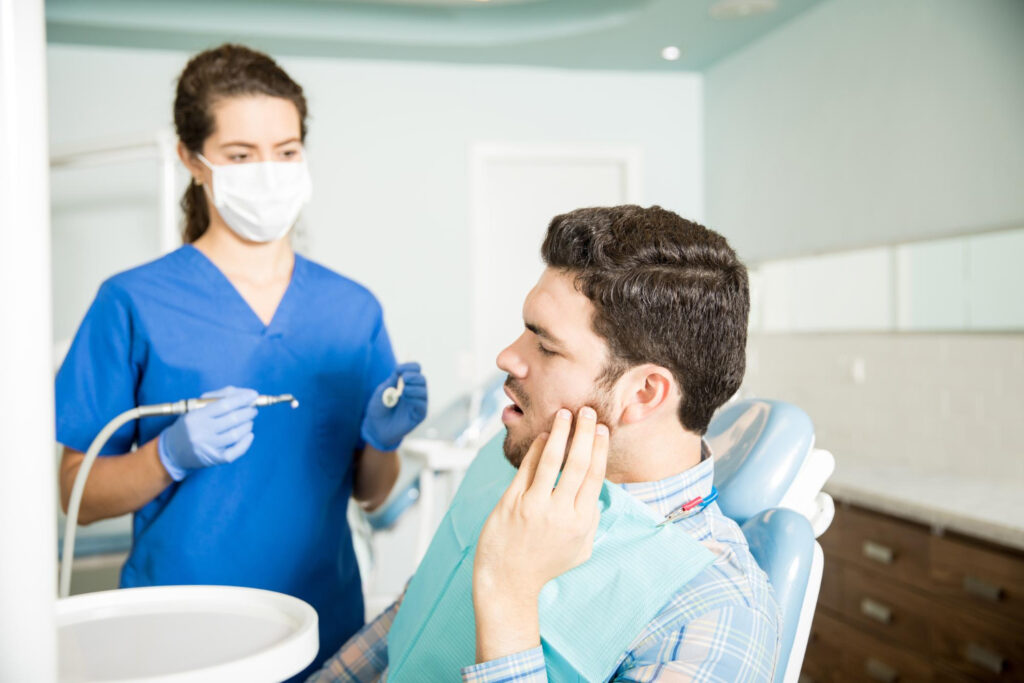
Plaque forms on everyone’s teeth, no matter how carefully they brush. It is a soft, sticky film of bacteria that builds up along the gumline and between teeth throughout the day.
At-home care can remove plaque before it hardens, but it cannot safely remove tartar once it has formed. Understanding the difference between plaque and tartar, and knowing when professional cleaning is needed, can help you protect your teeth and gums.
Island Park Dental provides comprehensive family dental care in Ottawa, including professional cleanings, examinations and guidance on effective home care.
What Is Plaque and Why Does It Keep Coming Back?
Plaque is a colourless or pale-yellow bacterial film that forms continuously on your teeth, gums and dental restorations. It is not dirt. It is a living community of bacteria that uses saliva and food particles to build a protective layer on your teeth.
Plaque forms in stages:
Minutes after brushing, a thin protein layer from your saliva coats your teeth.
Within one to two hours, bacteria attach to this layer and begin to multiply.
Over several hours, the bacteria produce a sticky substance that helps them cling to the tooth surface.
Every time you eat, especially sugary or starchy foods, the bacteria produce acid that can weaken enamel.
If plaque is not removed within 24 to 72 hours, it can begin to harden into tartar.
Because plaque formation is a natural biological process, it cannot be eliminated permanently. The goal of daily oral hygiene is to disrupt the plaque regularly before it matures and causes damage.
Why Is Plaque Dangerous?
If plaque is not removed consistently, it can contribute to several oral health concerns:
Tooth decay: Acid produced by plaque bacteria can erode enamel and lead to cavities.
Gingivitis: Plaque along the gumline can cause redness, swelling and bleeding. This early stage of gum disease is often reversible with improved cleaning and professional care.
Periodontitis: Untreated gingivitis can progress to a more serious infection that affects the bone and tissues supporting the teeth.
Bad breath: Bacterial activity in plaque is a common cause of persistent odour that does not improve with brushing alone.
Overall health links: Chronic gum inflammation has been associated with other health conditions, including heart disease and diabetes complications.
Plaque vs Tartar: The Key Difference
| Feature | Plaque | Tartar (Calculus) |
|---|---|---|
| Consistency | Soft and sticky | Hard and calcified |
| Colour | Colourless to pale yellow | Yellow to brown |
| Formation | Bacteria colonise the tooth surface | Plaque mineralises over 24–72 hours |
| Removable at home? | Yes, with brushing and flossing | No, requires professional cleaning |
| Risk if untreated | Cavities, gingivitis | Advanced gum disease, bone loss |
How to Tell Which One You Have
You can perform a simple self-check:
Run your tongue over your teeth. Plaque feels fuzzy or slightly slimy. Tartar feels rough, gritty or like a hard ridge, often behind the lower front teeth.
Look in a well-lit mirror. Plaque is mostly colourless and difficult to see. Tartar is visible as a chalky yellow or brown deposit along the gumline.
Brush the area thoroughly. If the buildup clears away, it is likely plaque. If it does not move, it may have hardened into tartar.
Consider using disclosing tablets from a pharmacy. These temporarily stain plaque so you can see where your brushing may be missing.
If you suspect tartar, home care alone will not remove it. A professional cleaning is required.
How to Remove Plaque From Teeth at Home
Electric vs Manual Toothbrush
Both electric and manual toothbrushes can remove plaque effectively when used correctly. Some studies suggest that electric toothbrushes with rotating–oscillating heads may achieve slightly greater plaque reduction for certain users.
Regardless of the type of brush you choose:
Use soft bristles to protect enamel and gums.
Brush for two minutes, twice a day.
Hold the brush at a 45-degree angle to the gumline.
Use gentle circular or short back-and-forth strokes.
Clean the outer, inner and chewing surfaces of each tooth.
Pay attention to the inner surfaces of the lower front teeth, which are commonly missed.
Flossing Technique for Plaque Removal
Your toothbrush cannot reach the spaces between teeth, which account for a significant portion of each tooth’s surface. Flossing once daily helps remove plaque from these areas.
Use about 40 cm of floss and wind it around your middle fingers.
Gently slide the floss between each tooth in a C-shape, curving it around the tooth and just under the gumline.
Use a fresh section of floss for each gap.
If your gums bleed when you start, this may indicate existing inflammation. With consistent flossing, bleeding often reduces within two weeks.
Interdental Brushes
Interdental brushes can be helpful for people with wider gaps, bridges, braces or receding gums. These small brushes can reach between teeth and remove deposits that floss may miss.
Mouthwash
Antibacterial mouthwash can reduce bacterial counts and support plaque control. It should be used as an addition to brushing and flossing, not as a replacement.
Avoid rinsing with mouthwash immediately after brushing, as it may wash away concentrated fluoride from your toothpaste.
Prolonged use of some mouthwashes may contribute to staining. Discuss suitable products and frequency with your dental team.
Water Flossers
Water flossers use a stream of pressurised water to flush plaque and debris from between teeth and along the gumline. They can be a useful alternative for people who find traditional flossing difficult.
Natural Remedies for Plaque: What the Evidence Says
Baking soda: Occasionally used as a paste with water, baking soda is mildly abrasive and can help neutralise acid. It should not replace fluoride toothpaste and should not be used excessively, as overuse may wear enamel.
Oil pulling: Some small studies suggest modest benefits for bacterial counts, but it should not replace core oral hygiene practices.
Apple cider vinegar: Highly acidic and not recommended for regular use on teeth, as it may contribute to enamel erosion.
Diet: Reducing sugary and refined carbohydrate intake can limit the fuel available to plaque bacteria. Drinking water throughout the day helps rinse food particles away.
No natural remedy can remove tartar once it has formed. These approaches may support your routine but cannot substitute for brushing, flossing and professional care.
What You Cannot Remove at Home
Signs that you may have tartar include:
A hard, rough deposit behind the lower front teeth.
Gums that are dark red or bleed regularly.
Bad breath that does not improve with brushing.
Yellowish or brownish deposits near the gumline.
Attempting to scrape tartar yourself with metal tools can scratch enamel, injure gums and push deposits further below the gumline. Professional cleaning is the safe and effective option.
Professional Plaque Removal: What Dentists Use
A professional scale and polish removes plaque and tartar that your toothbrush cannot reach. Dentists and hygienists may use:
Ultrasonic scalers: These use high-frequency vibrations and a fine water spray to break down and flush away calculus.
Hand scalers: Used for precise removal in specific areas.
Polishing: Smooths the tooth surface after scaling, making it harder for new plaque to adhere.
Root planing: For more advanced gum disease, this technique smooths root surfaces to support gum healing.
Most patients find the procedure comfortable. Those with sensitive teeth may experience mild, temporary sensitivity.
When to See a Dentist
You should consider a dental appointment if:
You notice hard deposits that do not brush away.
Your gums bleed regularly or appear swollen.
You have persistent bad breath.
You have not had a professional cleaning in the past six to twelve months.
You are searching for a local dentist near me or a dental emergency clinic for urgent concerns.
Island Park Dental offers comprehensive family dental care in Ottawa, including examinations, cleanings and guidance tailored to your oral health needs.
Cosmetic and Preventive Care at Island Park Dental
Beyond plaque control, Island Park Dental supports patients seeking professional teeth whitening near me and other cosmetic options. A thorough cleaning is often recommended before whitening so that surface deposits do not interfere with treatment. Your dental team can explain whether whitening is suitable for your teeth and what results may be realistic.
If you experience sudden tooth pain, swelling, a broken tooth or other urgent concerns, Island Park Dental can discuss your symptoms and help you determine the next appropriate step. For life-threatening symptoms such as difficulty breathing, swallowing or rapidly spreading facial swelling, seek emergency medical care immediately.
Frequently Asked Questions
Does professional cleaning damage tooth enamel?
No. Scaling removes tartar and plaque, not healthy enamel. Uncontrolled tartar buildup is more damaging than a properly performed professional cleaning.
Why do my teeth feel sensitive after cleaning?
Tartar may have been covering slightly exposed root surfaces. Sensitivity is usually temporary and resolves within a few days.
How quickly does plaque form?
Plaque begins forming within minutes of brushing and can start to harden into tartar within 24 to 72 hours.
Is bleeding during a professional clean normal?
Light bleeding can occur when there is existing gum inflammation. It is not a sign of damage from the procedure.
How often should you get a professional dental cleaning?
For most adults with healthy gums, every six months is commonly recommended. People with a history of gum disease, smokers, those with diabetes or individuals in orthodontic treatment may need more frequent visits.
Book Your Appointment at Island Park Dental
Regular professional cleanings and effective home care work together to keep your teeth and gums healthy. If you are looking for a local dentist near me, a dental emergency clinic or information about professional teeth whitening near me, Island Park Dental can discuss your needs and recommend appropriate care.
Contact Island Park Dental in Ottawa to schedule your appointment and receive personalised guidance on plaque control, cleanings and long-term oral health.
